
Introduction
StructureSpy com has become a keyword that many internet users search when looking for information about website structures, online resources, and digital insights. Whether you are a blogger, website owner, SEO specialist, student, or someone interested in learning about online platforms, understanding what StructureSpy com represents can help you discover useful information and improve your knowledge of website organization.
Modern websites are more than just collections of pages. They consist of carefully planned structures, navigation systems, categories, content hierarchies, and technical elements that improve user experience and search engine visibility. A platform associated with StructureSpy com is often discussed in relation to analyzing, organizing, or understanding these website structures.
This guide explains the concept behind StructureSpy com, its possible applications, advantages, features, and why structured websites are essential in today’s digital world.
What Is StructureSpy com?
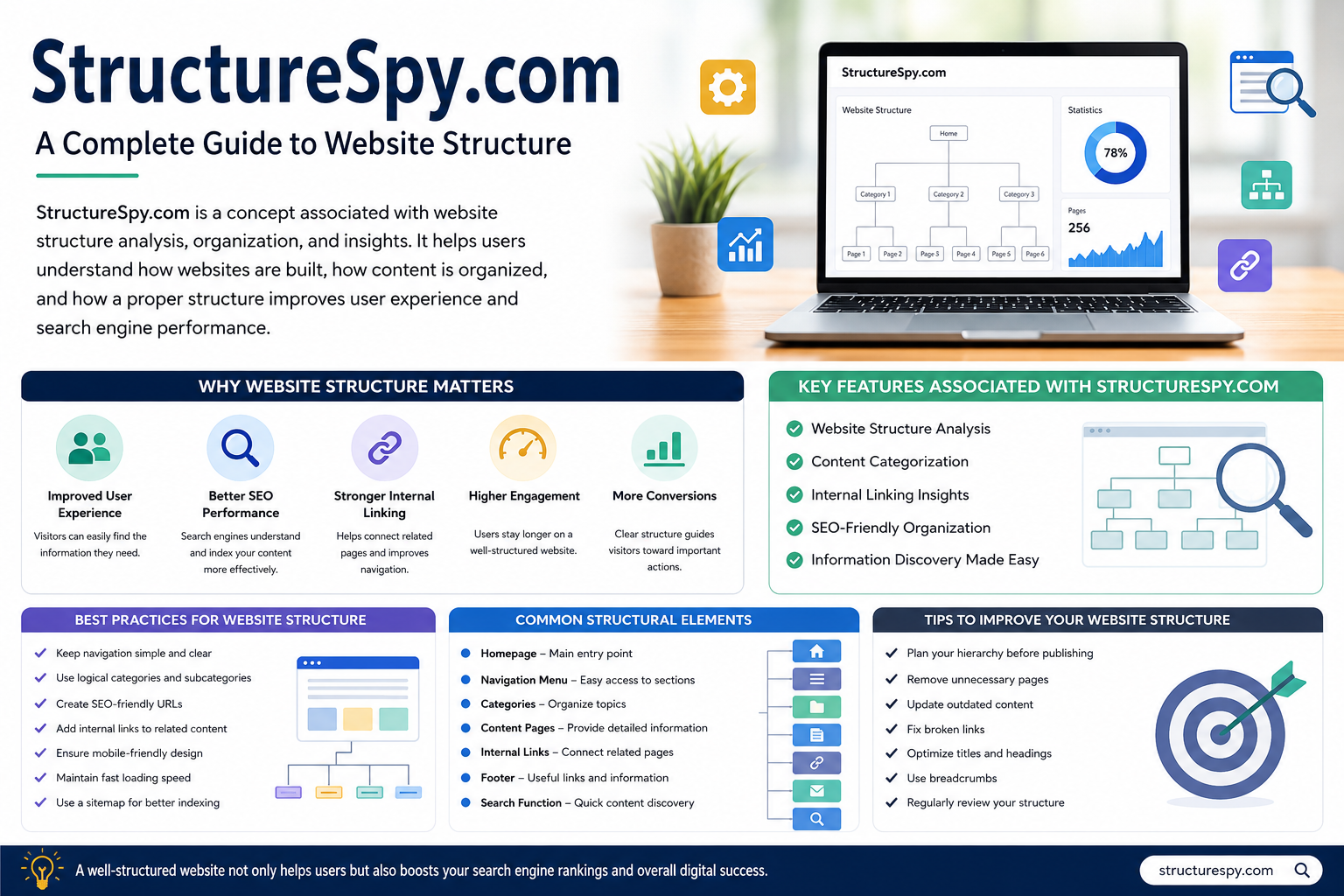
StructureSpy com refers to an online platform or keyword associated with website structure analysis, digital organization, and internet resources. People searching for this term are usually interested in understanding how websites are built, how information is organized, and how proper website architecture benefits users and search engines.
Although every website serves a different purpose, they all rely on a strong structure to present information clearly. Good organization helps visitors navigate pages efficiently while making it easier for search engines to crawl and index content.
Why Website Structure Matters
Website structure is one of the most important aspects of digital success. A properly organized website offers several advantages.
Improved User Experience
Visitors can quickly find the information they need without unnecessary clicks. Clear navigation keeps users engaged and reduces frustration.
Better Search Engine Optimization
Search engines prefer websites with logical organization. Proper internal linking, categories, and page hierarchy help search engines understand content relationships.
Faster Navigation
Users appreciate websites that are simple to browse. Well-structured menus and categories reduce confusion.
Higher Engagement
Visitors tend to stay longer on websites where information is easy to access, increasing page views and reducing bounce rates.
Key Features Associated with StructureSpy com
While specific features may vary, the keyword StructureSpy com is commonly associated with several useful concepts.
Website Analysis
Analyzing page organization and overall website architecture.
Content Categorization
Grouping articles and pages into relevant topics for easier browsing.
Internal Linking Insights
Understanding how pages connect with one another to improve navigation.
SEO-Friendly Organization
Helping website owners create structures that search engines can easily understand.
Information Discovery
Making online resources easier to locate through logical categorization.
Benefits for Bloggers
Bloggers constantly publish new content, making organization increasingly important. StructureSpy com concepts encourage bloggers to:
- Organize articles into meaningful categories.
- Improve internal linking.
- Create topic clusters.
- Simplify website navigation.
- Increase reader engagement.
These practices also contribute to better search engine rankings over time.
Benefits for Business Websites
Businesses rely on professional websites to attract customers. A structured website helps businesses by:
- Presenting services clearly.
- Highlighting important pages.
- Improving customer trust.
- Supporting online marketing campaigns.
- Increasing conversion opportunities.
An organized website reflects professionalism and improves customer confidence.
Importance for SEO Professionals
SEO experts understand that website architecture directly affects search performance. StructureSpy com concepts align with several SEO best practices.
These include:
- Clean URL structures
- Logical page hierarchy
- Breadcrumb navigation
- Internal linking strategies
- XML sitemap organization
- User-friendly navigation
When combined, these elements improve both user experience and search engine visibility.
Table: Website Structure Best Practices
| Feature | Benefit |
| Clear Navigation | Easier browsing |
| Internal Links | Better page discovery |
| Categories | Organized content |
| Mobile-Friendly Layout | Improved accessibility |
| Fast Loading Speed | Better user experience |
| Simple URL Structure | SEO improvement |
| Sitemap | Faster indexing |
| Quality Content | Higher engagement |
Common Elements of a Well-Structured Website
Most successful websites share similar structural components.
Homepage
Introduces the website and directs visitors toward important sections.
Navigation Menu
Allows users to move between categories and pages efficiently.
Categories
Organize content into logical topics.
Individual Pages
Provide detailed information on specific subjects.
Footer
Contains useful links, contact details, policies, and additional navigation.
Search Function
Helps users locate specific content quickly.
How StructureSpy com Can Inspire Better Website Design
Even without advanced technical skills, website owners can learn valuable lessons from website structure principles.
Some practical improvements include:
- Simplifying navigation menus.
- Reducing unnecessary pages.
- Organizing articles by category.
- Adding helpful internal links.
- Updating outdated content.
- Improving page titles and headings.
These improvements create a more enjoyable browsing experience.
Tips for Building an Organized Website
If you’re creating your own website, consider these recommendations:
- Plan your site hierarchy before publishing.
- Keep menus simple.
- Limit unnecessary categories.
- Use descriptive page titles.
- Create topic-based content.
- Link related articles together.
- Optimize for mobile devices.
- Regularly review your website structure.
Small improvements made consistently often produce significant long-term results.
Common Mistakes to Avoid
Many websites lose visitors because of poor organization.
Avoid these mistakes:
- Too many menu options
- Broken internal links
- Duplicate content
- Confusing page hierarchy
- Missing navigation
- Slow loading pages
- Poor mobile optimization
- Inconsistent categories
Correcting these issues improves usability and SEO performance.
Who Can Benefit from StructureSpy com?
The ideas associated with StructureSpy com are valuable for many audiences, including:
- Bloggers
- Digital marketers
- SEO specialists
- Website developers
- Small business owners
- Students
- Content creators
- Online entrepreneurs
Anyone managing digital content can benefit from understanding website organization.
Future of Website Structure
As search engines become more advanced, website structure will continue to play an important role. Artificial intelligence, voice search, and personalized user experiences all depend on websites being organized effectively.
Future websites will likely focus even more on:
- Faster navigation
- Better accessibility
- AI-friendly organization
- Improved mobile experiences
- Enhanced user engagement
- Smarter internal linking
Businesses and content creators who prioritize organization today will be better prepared for future digital trends.
Conclusion
StructureSpy com represents an important concept in the world of website organization and digital content management. Whether you are running a personal blog, managing a business website, or learning SEO, understanding website structure is essential for long-term success.
A well-organized website improves user experience, supports better search engine rankings, increases visitor engagement, and makes content easier to discover. By following best practices such as logical navigation, effective internal linking, clear categories, and quality content organization, website owners can build platforms that serve both users and search engines efficiently.
As the internet continues to evolve, structured websites will remain a cornerstone of successful online experiences. Learning and applying the principles associated with StructureSpy com can help create stronger, more effective, and user-friendly digital platforms.